Disposable vs Reusable Food Trays for Cafeterias: Which Should You Order?
Cafeterias with a dish room and diners who eat on site get the most from reusable nesting food trays, while grab-and-go counters, events and kitchens without washing capacity are better served by disposable food trays. Customized Food Trays prints both with the same branding, so many cafeterias order a mix rather than choosing one.
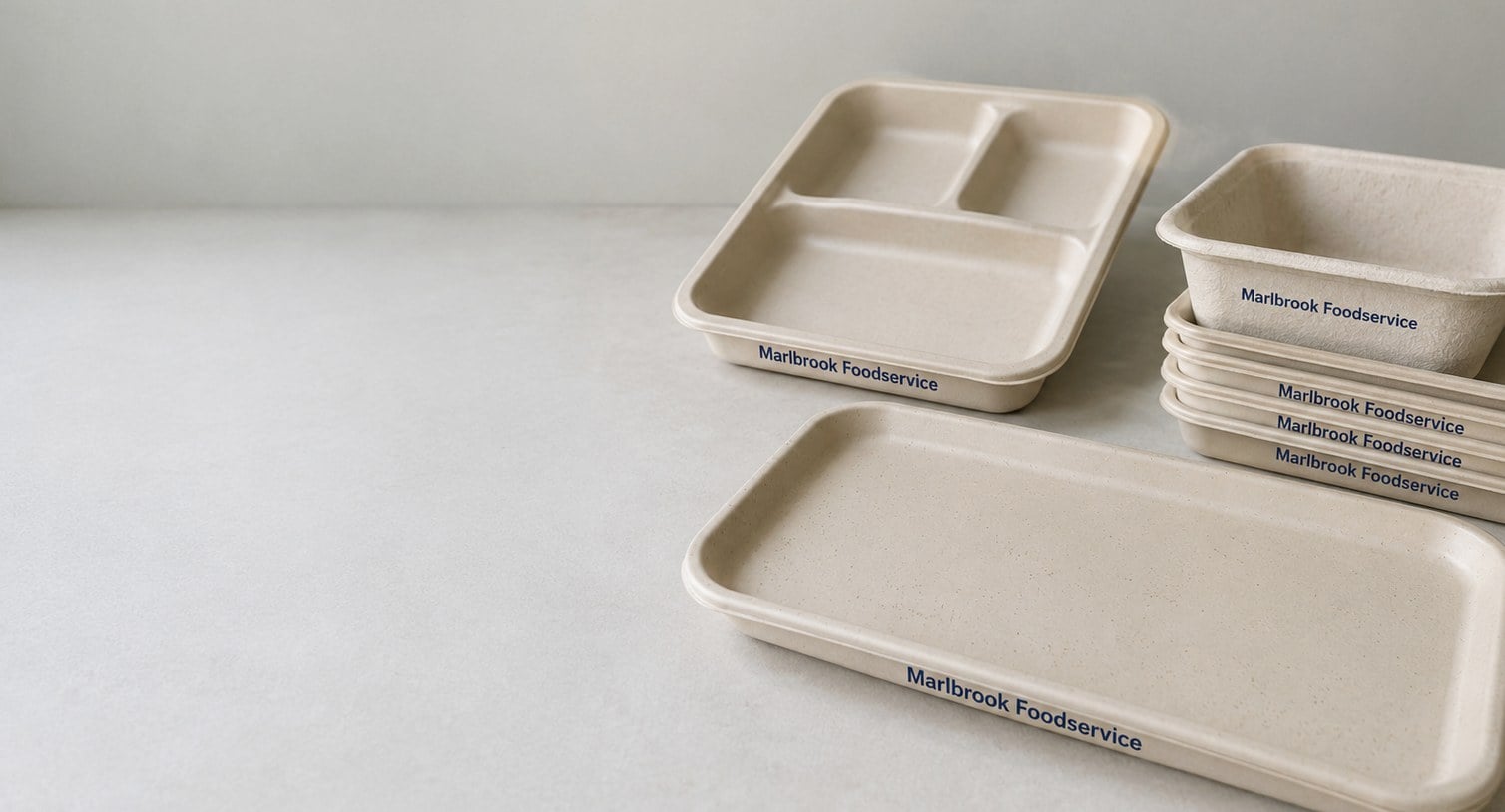
- Reusable nesting trays suit on-site dining with a dish return
- Disposable trays suit grab-and-go, events and kitchens that do not wash trays
- Both styles can carry the same printed logo
- Minimum order of 12, free mockup within 24 hours
- Standard turnaround about 2 weeks, faster with express shipping
Should a cafeteria order disposable or reusable food trays?
Most cafeterias should order reusable nesting food trays when they have a dish room and staff to run it, and disposable food trays when they do not wash dishes, serve off-site or need to move people fast. Customized Food Trays prints both, so the choice comes down to how your kitchen works, not what a supplier happens to stock.
The decision is rarely all or nothing. Many school, hospital and workplace cafeterias run reusable trays on the main line and keep a stack of disposable compartment or concession trays for grab-and-go, outdoor events and days when the dishwasher is down. Thinking of the two as partners rather than rivals usually leads to the best order.
- Reusable nesting trays: bought once, washed and returned to the line, carry your logo for years of service.
- Disposable trays: no washing, no returns, easy to send out the door with a meal.
- Both: printed with the same artwork so the brand looks consistent wherever food is served.
How do disposable and reusable food trays compare side by side?
Disposable and reusable food trays differ most in labor, storage and how long the branding stays in front of diners. The table below compares the styles Customized Food Trays offers for cafeteria service, using only the traits that change the decision.
| Factor | Reusable nesting trays | Disposable food trays |
|---|---|---|
| Best setting | Sit-down dining rooms with a dish return | Grab-and-go, off-site meals, events |
| Labor after service | Collecting, washing, drying and restacking | Bin or compost, no washing |
| Storage | One working set that cycles through the kitchen | Cases of stock that are used up and reordered |
| Branding life | Logo seen meal after meal for years | Logo seen once per meal, then discarded |
| Food fit | Holds plates, bowls and cups on a flat deck | Food sits directly in the tray or its compartments |
| Reorder rhythm | Occasional top-ups for lost or worn trays | Regular, tied to meal counts |
Neither column wins outright. A cafeteria with a busy dish room and a stable headcount gets the most from reusable trays. A cafeteria that feeds people who leave the building, or that runs pop-up stations, leans disposable.
When are reusable nesting serving trays the better choice?
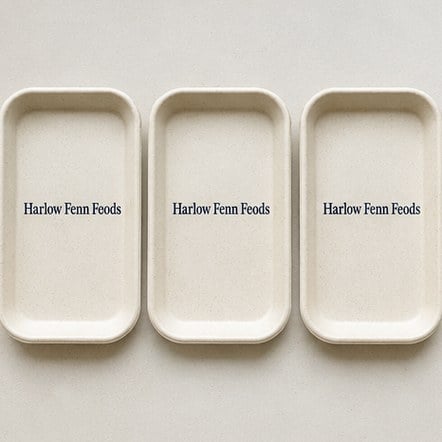
Reusable nesting serving trays are the better choice when diners eat on site, return their trays and your kitchen already runs a dishwasher. In that setting a single working set of trays serves breakfast, lunch and dinner, and the logo printed on each tray greets every diner at every meal.
Nesting matters more than most buyers expect. Trays that nest stack tightly at the start of the line, dry without trapping water and take up less shelf space when the dining room is closed. A tray that stacks poorly slows the line and clutters the dish room, no matter how good it looks.
Reusable trays suit:
- School and university dining halls with a tray return window.
- Hospital and care-home cafeterias serving staff and visitors on site.
- Corporate canteens where the same people eat in the same room every day.
The trade-off is labor. Someone has to collect, wash, dry and restack every tray after every service. If your team is already stretched, factor that time into the decision before choosing reusable trays alone.
When do disposable food trays make more sense for a cafeteria?
Disposable food trays make more sense when meals leave the dining room, when there is no dish room, or when speed matters more than anything else. A printed tray that goes in the bin or compost after the meal removes the collect-and-wash cycle entirely, which frees staff for cooking and serving.
Cafeterias usually reach for disposable trays in these situations:
- Grab-and-go counters: compartment meal trays keep a main and two sides apart without separate containers.
- Outdoor and off-site events: field days, staff barbecues and open days where nobody wants to carry dirty trays back.
- Snack and concession windows: rolled-rim concession trays handle fries, nachos and hot snacks.
- Pre-packed meals: sealed meal-prep trays hold portioned meals that are prepared ahead and picked up later.
Material choice matters here. Paperboard trays with a grease barrier suit hot, oily food, and moulded fibre trays give a sturdier, plastic-free feel for buyers who want a compostable-looking option. Tell Customized Food Trays what you serve and it will match the material to the menu.
Can disposable and reusable food trays carry the same branding?
Yes. Customized Food Trays can print the same logo, colors and message on reusable nesting trays and on disposable food trays, so the dining room line and the grab-and-go counter look like one operation. One artwork file covers both, and the free mockup shows each tray style before anything is printed.
The print area is different on each style, so the layout adapts. A flat nesting tray offers a broad deck where a centered logo and a short line of text read well. A compartment tray or rolled-rim tray has a smaller flat area, so a simpler mark often works better. The mockup, returned within 24 hours, shows exactly how your artwork sits on each tray.
Good uses of matched branding include:
- A school crest on dining hall trays and on field-day trays.
- A hospital cafeteria name on reusable trays and on staff takeaway trays.
- A workplace canteen brand carried onto event catering trays.
See printed and branded trays for decoration options. Revisions to the mockup are unlimited and free, and you pay nothing until you approve the design.
How should a cafeteria plan quantities for each tray type?
Plan reusable food trays around the busiest single service plus a buffer for trays in the dish room, and plan disposable food trays around meal counts between reorders. The two follow different logic, so estimate them separately rather than splitting one number.
For reusable nesting trays, ask how many diners are holding a tray at the peak of your busiest meal, then add enough extra to cover trays that are being washed and dried at the same moment. Losses and wear are modest, so reorders are occasional top-ups.
For disposable trays, multiply the meals that use them by the weeks you want each order to cover, then check that the cases fit your dry storage. Customized Food Trays accepts orders from a minimum of 12, which suits a trial of a new style before you commit a whole term or quarter to it.
- List every service point: main line, grab-and-go, events, snack window.
- Assign a tray type to each one.
- Estimate peak use for reusable trays and weekly use for disposable trays.
- Check storage space before setting the order size.
- Send the totals through the custom quote form.
How long does it take to get custom cafeteria trays?
Custom food trays from Customized Food Trays follow the same timeline whether they are reusable or disposable: a free mockup within 24 hours, unlimited free revisions, and standard turnaround of about 2 weeks after you approve the design. Faster turnaround is available with express shipping when a term start or event date is close.
Cafeterias tend to order around fixed calendar points, such as the start of a school term, a new menu launch or an annual open day. Working backward from that date is the simplest way to avoid a rush:
- Request a quote with your tray types, quantities and artwork.
- Review the mockup and ask for any changes.
- Approve the design; production starts and you pay nothing before this point.
- Receive trays in about 2 weeks, or sooner with express shipping.
If you are ordering both tray types, send them in the same request. One approval process for matching artwork keeps the branding consistent and saves a second round of review. The how it works page walks through each step in more detail.
What should a cafeteria manager check before ordering?
Before ordering custom food trays, a cafeteria manager should confirm how trays are washed or disposed of, what food each tray holds, how many service points need trays, and when the trays must arrive. Those four answers decide the right mix of reusable and disposable trays faster than any brochure.
- Washing: does your dish room have the capacity and staff for reusable trays at every meal?
- Food: plates and bowls on a deck, or food served directly in the tray?
- Heat and grease: hot, saucy or fried items need a barrier on disposable trays.
- Waste: does your site compost, recycle or send everything to general waste?
- Storage: where will cases of disposable trays and stacks of reusable trays live?
- Branding: one logo across every tray, or different messages per station?
Share these details with Customized Food Trays when you ask for a quote. The team will recommend the simplest combination of styles that covers your service, and the free mockup lets you see every tray before you commit.
Frequently asked questions
Are reusable nesting food trays practical for a school cafeteria without a tray return?
Reusable nesting food trays work best when diners bring trays back to a return point, so a school without one should plan for staff to collect them or choose disposable food trays instead. Customized Food Trays can print the school crest on either style, so a school can start with disposable trays and add reusable ones later if a return window is installed.
Can one order of custom food trays include both reusable and disposable styles?
Custom food trays in different styles can be requested together, and Customized Food Trays will quote each style in the same request. Sending both at once means one review of the artwork, one free mockup covering every tray, and matching branding across the dining room and the grab-and-go counter. Each style still needs to meet the minimum order of 12.
Which disposable food tray suits a cafeteria grab-and-go counter?
Compartment meal trays are usually the best disposable food tray for a grab-and-go counter because they keep a main dish and sides apart without extra containers. For pre-portioned meals made ahead, sealed meal-prep trays with a film lid travel better. Customized Food Trays can recommend the right style once you describe the menu and how diners carry meals away.
Do printed logos on reusable cafeteria food trays wear off from washing?
Printed logos on reusable cafeteria food trays are meant to stay legible through regular washing, though harsh chemicals and abrasive scrubbing shorten the life of any print. Share your dish room routine with Customized Food Trays when you ask for a quote, so the decoration method and tray build can be matched to how often and how hard the trays are washed.
How do hospital cafeterias usually split reusable and disposable food trays?
Hospital cafeterias commonly use reusable nesting food trays for staff and visitors eating on site, and disposable trays for meals carried to wards, offices or night-shift break rooms. Customized Food Trays can print both with the same cafeteria name so the brand stays consistent. The mockup within 24 hours shows how the artwork fits each tray style before anything is made.
Is compostable moulded fibre a good disposable food tray for a cafeteria?
Moulded fibre food trays suit cafeterias that want a sturdy, plastic-free disposable option, especially for dry or lightly sauced meals. Whether they can be composted depends on your local waste service, so check what your site accepts before ordering. Customized Food Trays can print your logo on moulded fibre trays and advise whether the style fits your menu.
Can a workplace canteen print a different message on event food trays?
A workplace canteen can keep its logo on everyday food trays and print a separate event message on disposable trays for a staff party, open day or charity lunch. Customized Food Trays treats each design as its own artwork with its own mockup and unlimited free revisions. Each design needs to meet the minimum of 12 trays.
What happens to the mockup if a cafeteria orders two tray styles at once?
When a cafeteria orders two styles of food trays together, the free mockup shows the artwork placed on each tray so you can compare them side by side. Customized Food Trays returns the mockup within 24 hours, and you can request changes to one style without touching the other. Nothing is printed and nothing is paid until you approve.
Should a small staff cafeteria buy reusable food trays or stick to disposable ones?
A small staff cafeteria with a dishwasher and a steady headcount often gets good value from a modest set of reusable food trays, since the same trays serve every day. If washing would fall on one busy cook, disposable trays may be simpler. Customized Food Trays accepts orders from 12, so trying a small set first is realistic.
How should reusable cafeteria food trays be stored between services?
Reusable cafeteria food trays should be dried fully, then nested in stacks on a clean, dry shelf near the start of the serving line. Stacking wet trays traps moisture and slows the next service. Nesting serving trays from Customized Food Trays are designed to stack tightly, which keeps storage compact and lets staff restock the line quickly.
Can a cafeteria reorder the same custom food trays next term?
Custom food trays can be reordered with the same artwork, so next term's trays match the ones already in service. Keep the approved mockup and tell Customized Food Trays which style and design you are repeating. A fresh mockup confirms nothing has changed, and standard turnaround of about 2 weeks applies, with express shipping available when the term start is close.
Get a free mockup for your food trays
Send your logo or idea and the quantity you have in mind. Customized Food Trays returns a free mockup within 24 hours, you approve the design before anything is produced, and standard turnaround is about two weeks with faster options available. Get a custom quote.