Custom Food Tray Order Mistakes: What Goes Wrong on a First Order and How to Avoid It
The biggest mistakes on a first custom food tray order are choosing a style before checking it against the menu, printing the logo where food covers it, rushing the mockup review and timing the order from the event day. Customized Food Trays helps you avoid all four with a free mockup within 24 hours and unlimited revisions before anything is paid.
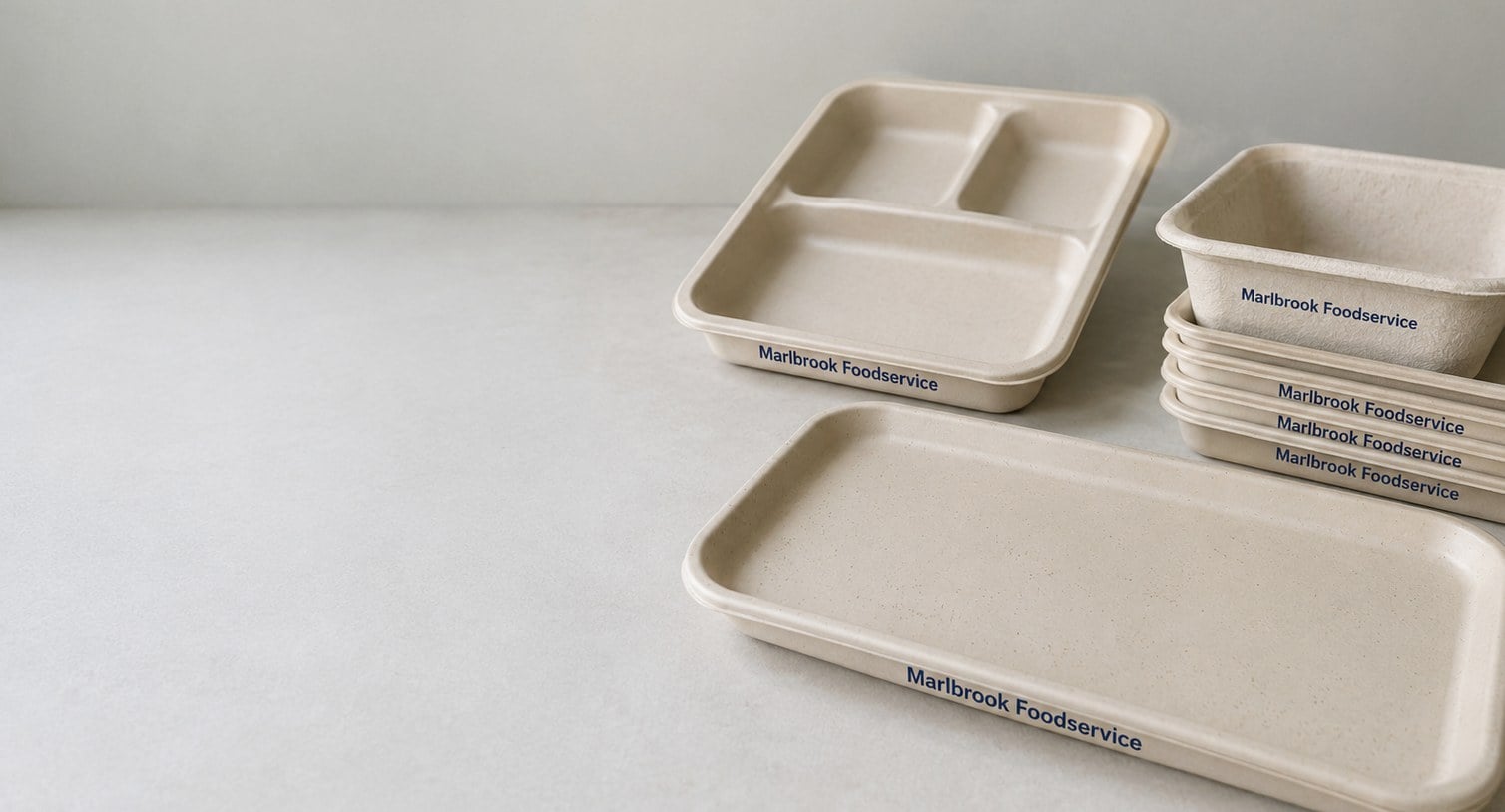
- Match the tray style to your busiest dishes before choosing a design.
- Place logos on walls, rims or patterns that stay visible when trays are loaded.
- Free mockup within 24 hours with unlimited free revisions.
- Nothing is paid until you approve the design.
- Standard turnaround is about 2 weeks; express shipping is available.
What are the most common mistakes on a first custom food tray order?
The most common mistakes on a first custom food tray order are choosing a tray style before testing it with the real menu, placing the logo where food will cover it, ordering one style for very different dishes, skipping a careful mockup review, and setting the order date from the event instead of the stocking date. Each one is easy to avoid once you know to look for it.
None of these mistakes comes from the printing itself. They happen in the planning, usually because the person ordering is not the person who will plate food into the trays on a busy shift. A concession manager thinks about the logo, the cook thinks about the sauce, and the tray ends up serving neither well.
The fix is to treat the order as a small project with three inputs: the food going into the tray, the place the tray will be used, and the date it must be on the counter. Customized Food Trays asks about all three before preparing a free mockup, which is returned within 24 hours. The sections below walk through each mistake, what it looks like in practice, and the simple check that prevents it.
Why does picking the tray style before the menu cause problems?
Picking a food tray style before the menu is fixed causes problems because the food decides the tray, not the other way around. A rolled-rim concession tray suits fries, nachos and hot dogs carried through a crowd, while a compartment meal tray suits a plated lunch with sides that should not touch, and a sealed meal-prep tray suits food that travels in a bag or sits in a fridge.
Buyers often fall for a tray they saw at another venue, then discover their own signature dish is wetter, heavier or saucier. The tray bends under a loaded barbecue plate, the gravy pools into the bread, or the lid film has nothing to grip because the rim got splashed during filling.
Before you choose, write down your three highest-volume menu items and how each is served: eaten standing, eaten seated, carried away or reheated later. Then compare the styles side by side. The rolled-rim concession trays, compartment meal trays, moulded fibre trays and sealed meal-prep trays pages describe what each style is built for, and Customized Food Trays can recommend a style when you describe the menu in the quote form.
Where should the logo go so food does not cover it?
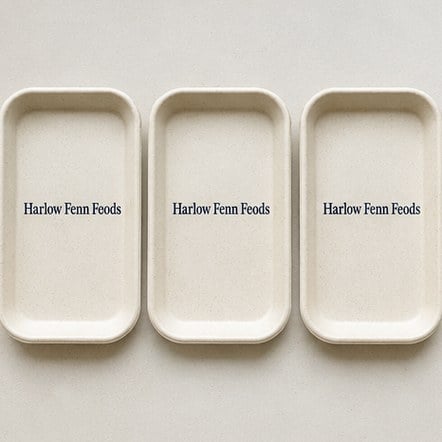
The logo on a custom food tray should sit where it stays visible after the tray is loaded, which is usually the outer wall, the rim area or a corner of the floor that food rarely reaches. A logo centered on the floor of a concession tray looks great in the mockup and then disappears under a pile of fries the moment the tray is in use.
This is the single most common design mistake on a first order. The mockup shows an empty tray, so the eye goes straight to the middle. On the counter, the middle is where the food lives. Customers see the walls, the edges and anything printed near the corners, and those are also the surfaces that show up in photos people post of their meal.
- Concession trays: favor the side walls and the ends, where the logo faces the customer as the tray is handed over.
- Compartment meal trays: use the divider tops or a small compartment that usually holds a dry side.
- Sealed meal-prep trays: remember that a label or the film may sit over part of the surface, so check what remains visible.
- Full-coverage designs: a repeating pattern keeps branding visible wherever food lands, which is why some buyers choose full-bleed printed food trays.
When you review the mockup, picture the tray with your busiest dish in it and ask what a customer will actually see.
Is one tray style for the whole menu a mistake?
One food tray style for the whole menu is a mistake when the menu mixes very different foods, such as dry snacks, saucy plates and take-home meals. A single style keeps ordering simple, but it forces some dishes into a tray that was never meant for them, and staff end up doubling trays or reaching for plain stock trays that carry no branding at all.
The opposite mistake also happens. Some first-time buyers order four or five styles to cover every edge case, then find two of them barely move and take up storage for months. The better approach is to match styles to the handful of dishes that make up most of your volume and let the remaining items share the closest fit.
For most venues that means one or two styles. A stadium might pair rolled-rim concession trays for the main stands with moulded fibre trays for a premium area. A caterer might pair compartment meal trays for boxed lunches with nesting serving trays for buffets. A single artwork file can usually be adapted across both, and Customized Food Trays shows each style in the same mockup so you can judge them together. See the rolled-rim concession vs moulded fibre comparison if you are weighing those two.
What gets missed when reviewing a food tray mockup?
The details most often missed when reviewing a food tray mockup are spelling in small text, the accuracy of brand colors, whether a QR code or web address is current, and whether the design suits every tray style in the order. Buyers tend to approve as soon as the logo looks right, which is exactly when a typo in a tagline slips through.
Customized Food Trays offers unlimited free revisions, so there is no reason to approve a mockup you are unsure about. Use a short review routine:
- Read every word aloud, including addresses, handles and any small print.
- Scan any QR code on screen and confirm it lands on the page you intend.
- Compare colors against your own printed materials, and note that natural fibre and kraft surfaces shift light inks.
- Check the design on each tray style in the order, not just the first one shown.
- Have the person who owns the brand and the person who runs the kitchen both look before you sign off.
Production begins only after you approve, and you pay nothing until you approve the design. That makes the mockup the cheapest place in the whole process to catch a mistake. Changing artwork after approval is possible, but it can push back your delivery date, so a careful review protects both the design and the schedule.
How does ordering too late or too early go wrong?
Ordering custom food trays too late goes wrong because the schedule has no room for a second mockup round or a shipping delay, and ordering too early goes wrong when the menu, logo or event details change after production. The right moment is when the menu and artwork are settled and there is still comfortable time before the stocking date.
Standard turnaround is about 2 weeks after design approval, plus delivery, and faster turnaround is available with express shipping. The mistake is counting backward from the event day rather than the day the trays need to be unpacked, stored and handed to staff. A food truck heading to a festival, for example, needs trays loaded before it leaves, not on the morning it opens the window.
Ordering too early has its own traps. A tray printed with an event date, a sponsor that later drops out or a menu tagline that changes becomes stock you cannot use. If details are still moving, keep the date-specific elements off the tray and put them on signage instead. The free mockup takes 24 hours, so you can lock the design early and place the production order once the details are final.
What should you send with your first quote request?
Your first quote request for custom food trays should include the menu items going into the trays, the tray styles you are considering, your logo file, the approximate quantity, the date the trays must arrive and the delivery address. Sending this up front avoids the most common delay on a first order, which is a back-and-forth of questions before the mockup can start.
| What to send | Why it matters |
|---|---|
| Menu items and how they are served | Lets the tray style match the food, not the other way around |
| Preferred tray styles | Shows which shapes the mockup should include |
| Logo in the best file you have | Speeds up the 24-hour mockup and avoids redraws |
| Approximate quantity | Sets up an accurate quote and production plan |
| Date trays must be on site | Confirms whether standard turnaround or express shipping fits |
Minimum order quantities depend on the tray style, so confirm the minimum for your chosen style on the quote rather than assuming a single figure. You can start on the custom quote page, and the how it works page lays out each step from mockup to delivery.
Frequently asked questions
Should I order custom food trays before testing them with my real menu?
Custom food trays are best ordered after you have pictured them with your real menu, because sauce, weight and portion size decide which style works. Describe your top dishes in the quote form and Customized Food Trays can suggest a fitting style. If you are unsure between two styles, ask for both in the mockup, which is free and returned within 24 hours, so you can compare them side by side.
What happens when a logo is printed in the middle of a concession tray floor?
A logo printed in the middle of a concession food tray floor is usually hidden as soon as the tray is filled, so customers rarely see it. Fries, nachos and hot dogs sit right on top of that spot. Moving the logo to the side walls, the ends or a repeating pattern keeps the branding visible while the food is being carried and eaten, and in any photos customers take.
Is approving a food tray mockup quickly a risk?
Approving a food tray mockup quickly is a risk when nobody has read the small text, scanned the QR code or checked colors against your brand. Customized Food Trays offers unlimited free revisions, so taking an extra day to review costs nothing. Production starts after approval, and later artwork changes can push back delivery, so a careful check up front protects both the design and the date.
Why do some first-time buyers end up with branded food trays they never use?
Branded food trays go unused when a first order includes styles that do not match how food is actually served, or when trays carry an event date or sponsor that later changes. Matching one or two styles to your highest-volume dishes and keeping date-specific details off the print are the simplest ways to make sure every tray in the order gets used on the counter.
Can I fix a spelling error on custom food trays after production starts?
Custom food trays already in production generally cannot be corrected without reprinting, which is why the mockup review matters so much. Customized Food Trays sends a free mockup within 24 hours and allows unlimited revisions before you approve. Read every word aloud, including addresses and handles, and have a second person check the proof before you sign off on the design.
Do brand colors look the same on every kind of food tray?
Brand colors on food trays can look different depending on the surface, because white paperboard, kraft and natural moulded fibre each shift how inks appear. Light colors are affected most. Compare the mockup against your own printed materials and mention any colors that must match closely. Customized Food Trays can then advise which tray surface keeps your colors closest to the original.
How do I avoid ordering too many styles of food trays on a first order?
Food tray orders stay manageable when you list your three busiest dishes and match a style to each, then let other items share the closest fit. Most venues need one or two styles, not five. Customized Food Trays can show several styles in one free mockup so you can see which designs actually earn their place before you commit to a production run.
Should a QR code on food trays point to a page that might change?
A QR code on food trays should point to a page that will stay live for as long as the trays are in use, such as a stable menu or loyalty page rather than a one-time promotion link. Printed trays may be handed out for months. Scan the code in the mockup before approving, and choose an address you control so you can update the content behind it.
Who in my business should review the food tray design before approval?
The food tray design should be reviewed by the person responsible for the brand and the person who runs the kitchen or service line. The brand owner checks logo, colors and wording, while the kitchen lead checks whether the style fits the food and how staff will fill and hand over the trays. Customized Food Trays sends the mockup to whoever you name.
Is it a mistake to print an event date on custom food trays?
Printing an event date on custom food trays is a mistake only if you might have trays left over or the date could move. For a one-time gala or opening with a firm date, a dated tray can feel special. For anything recurring, keeping the date off the tray and on signage lets every leftover tray be used at the next service without looking out of date.
What is the easiest way to avoid delays on a first custom food tray order?
The easiest way to avoid delays on a first custom food tray order is to send the menu, preferred tray styles, logo file, rough quantity, delivery address and the date trays must be on site in your first message. Customized Food Trays can then prepare the free mockup within 24 hours, and standard production of about 2 weeks begins as soon as you approve.
Can a first custom food tray order be checked before paying anything?
A first custom food tray order can be fully reviewed before you pay anything, because payment is only due after you approve the design. Customized Food Trays prepares a free mockup within 24 hours and makes unlimited free revisions. Use that window to confirm the tray style, logo placement, colors and wording so the production run matches exactly what you expect.
Get a free mockup for your food trays
Send your logo or idea and the quantity you have in mind. Customized Food Trays returns a free mockup within 24 hours, you approve the design before anything is produced, and standard turnaround is about two weeks with faster options available. Get a custom quote.