Custom Food Tray Quantity Planning: How Many to Order, Spares and Reorders
The right number of custom food trays comes from counting servings, not guests: multiply the items each customer carries by the services you plan to cover, add spares for breakage and doubling up, then decide which tray styles share the total. Customized Food Trays turns that count into a free mockup within 24 hours, with standard turnaround about 2 weeks.
- Count servings and tray uses, not headcount alone.
- Disposable food trays are consumed every service; nesting reusable trays are counted by peak use and wash cycle.
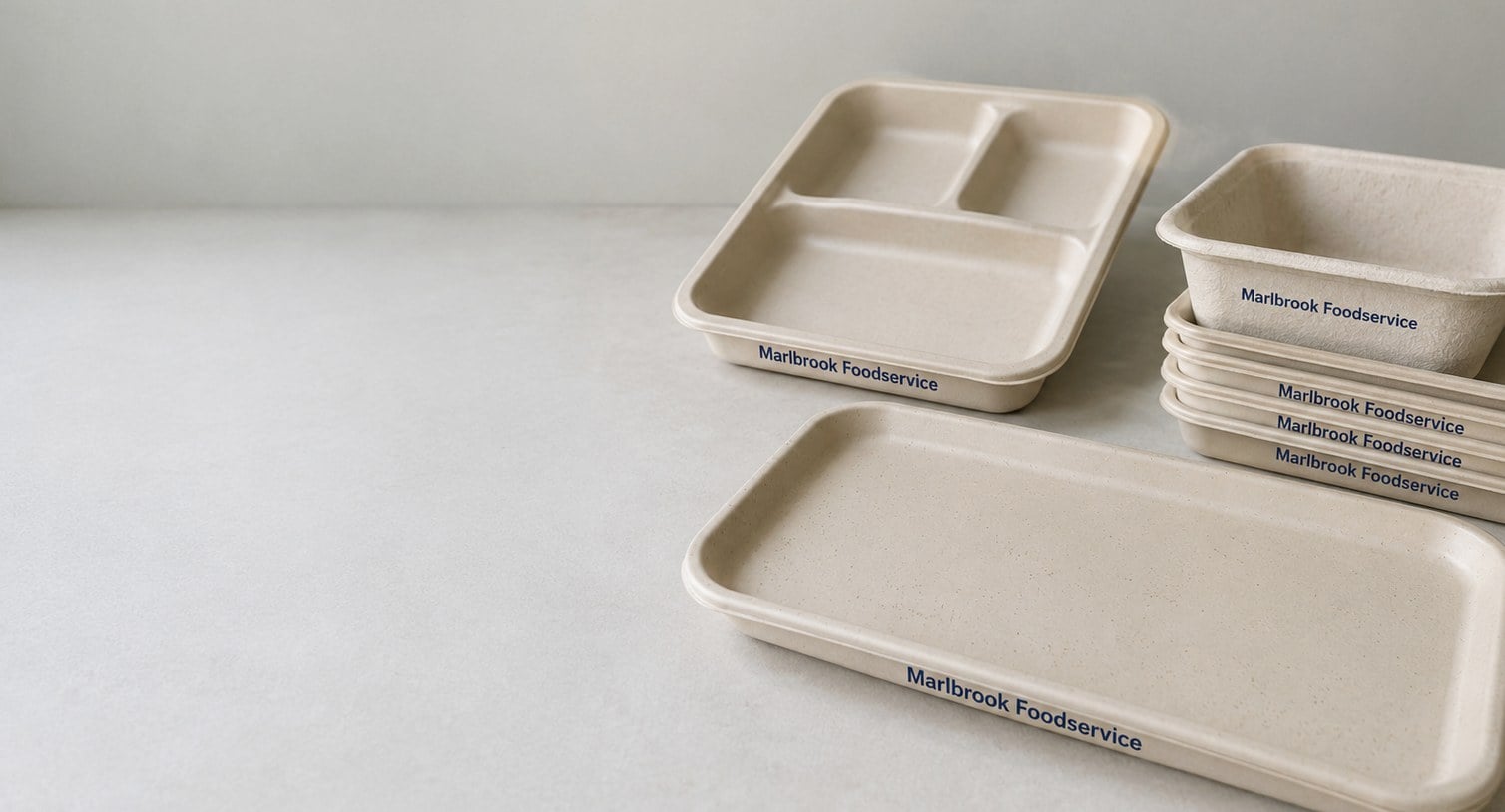
- One order can split the total across rolled-rim, compartment, moulded fibre, sealable and nesting styles.
- Free mockup within 24 hours and nothing to pay until you approve the design.
- Standard turnaround is about 2 weeks, so reorders are staged before stock runs low.
How do I work out how many custom food trays to order?
Start with servings, not people. A guest at a stadium may buy nachos at kickoff and a basket of fries at halftime, which means two food trays for one ticket. A cafeteria diner might use one compartment meal tray, while a family at a fundraiser dinner may stack two plates of food on separate trays. Write down how many items leave your counter on a typical day, then how many days or events the order has to cover.
Next, look at how each tray is used. Disposable food trays such as rolled-rim concession trays and moulded fibre trays are used once and thrown away, so the count tracks every serving. Nesting serving and cafeteria trays are washed and returned, so the count tracks the busiest service plus the trays sitting in the dish room at that moment.
- List every menu item that goes out on a tray.
- Estimate servings per day or per event from your sales records or ticket count.
- Multiply by the number of services the order should cover.
- Add a spare allowance for spills, doubled trays and staff use.
- Split the total across the tray styles you need.
Should disposable and reusable food trays be counted differently?
Yes. Disposable and reusable food trays answer different questions, so they need different math. For disposable trays the question is how many servings you will hand out before the next delivery arrives. For reusable nesting trays the question is how many trays are in use, in the wash and on the shelf during your single busiest hour.
A hospital or workplace canteen with a tray return can run on a modest pool of printed nesting trays because the same trays come back several times a shift. A school lunch line without enough dishwashing capacity may need far more trays than the line ever holds at once, simply because trays sit wet in racks. If you are still deciding between the two, the comparison of disposable and reusable cafeteria trays on the blog walks through that choice.
| Tray type | What you count | Main planning risk |
|---|---|---|
| Rolled-rim concession trays | Every serving handed out | Running out during a sellout or tournament weekend |
| Compartment meal trays | Every plated meal | Menu changes that alter how many meals use compartments |
| Moulded fibre trays | Every serving, plus doubled trays for heavy plates | Underestimating doubling for saucy or wet food |
| Sealed meal-prep trays | Every sealed meal produced | Weekly production swings and film-seal rejects |
| Nesting reusable trays | Peak use plus trays in the wash | Losses, breakage and slow dish rooms |
How many spare food trays should I keep on hand?
Keep enough spare food trays to absorb the things that never show up in a sales report. Staff grab trays for their own meals, a cashier doubles a tray under a heavy barbecue plate, a sleeve gets crushed in storage, and a rainy day sends people inside to eat instead of walking away. Each of those uses a tray that was never a sale.
There is no universal spare figure that fits every operation, so look at your own pattern. Operations serving wet, heavy or saucy food tend to double trays more often and need a larger cushion. Venues with unpredictable crowds, such as festivals or playoff games, should lean toward more spares because a stockout in the middle of a rush costs far more than a few leftover sleeves. Steady operations, such as a weekday staff cafeteria, can run tighter because demand barely moves.
- Track how many trays were used against how many items were sold for a few weeks.
- Note which menu items lead to doubled trays.
- Count damaged or wasted trays at each stock check.
- Use that gap as your spare allowance on the next order.
Can one order cover several tray styles with the same logo?
Yes. Customized Food Trays can split one order across several tray styles that carry the same artwork, which is often the smartest way to plan quantity. A stadium might put most of its volume into rolled-rim concession trays for the main stands, a smaller share into compartment meal trays for suite catering, and a few sleeves of moulded fibre trays for a plastic-free fan zone.
Splitting the total this way stops you from over-ordering one style just to cover a menu it does not suit. It also keeps branding consistent across every counter. The mockup shows the logo on each tray style, so you can confirm placement on a shallow concession tray and a deep compartment tray before anything is printed.
When you split a quantity, rank each style by how painful a stockout would be. The style that carries your best seller deserves the biggest share and the biggest spare cushion. Specialty styles used at one station can run leaner and be topped up with a reorder.
When should I place a reorder for custom food trays?
Place a reorder for custom food trays while you still have enough stock to cover the full turnaround plus a safety margin. Standard turnaround is about 2 weeks, and faster turnaround is available with express shipping, but planning around the standard timeline keeps you from paying for speed you did not need.
The simplest method is a reorder point. Work out how many trays you use in a normal two-week stretch, add your spare allowance, and mark that level on the shelf or in your inventory sheet. When stock drops to the mark, request the reorder. Because your artwork is already approved, a repeat order of the same design moves straight to production planning, although a fresh mockup is easy if you change anything.
- Set the reorder point higher before peak season, such as football, holidays or summer festivals.
- Stage seasonal designs as their own smaller runs so evergreen trays are never tied to one event.
- Check stock after every big event rather than waiting for the monthly count.
What quantity mistakes do first-time food tray buyers make?
The most common quantity mistake is ordering by headcount and forgetting that many customers carry more than one food tray. The second is ordering one huge run of a single style, then discovering that half the menu would have been better served by compartment or sealable trays.
Other mistakes show up later. Buyers forget storage: a large delivery of food trays needs dry, flat shelf space away from kitchen steam, or the bottom sleeves warp. Buyers put an event date on every tray, so leftover stock cannot be used after the event. Buyers also wait until the last sleeve is open to reorder, which turns a routine repeat into a rush.
- Count servings per customer, not only customers.
- Match each menu item to a tray style before setting totals.
- Keep dated or seasonal artwork on a separate, smaller run.
- Confirm you have storage space for the full delivery.
- Set a reorder point that covers the turnaround.
If your quantity is still a guess, send your menu and expected servings with the custom quote request. The team will suggest a sensible split before you approve anything.
How do sealed meal-prep and catering orders change the count?
Sealed meal-prep and catering orders change the count because quantity follows production, not foot traffic. A meal-prep brand plans sealed meal-prep trays around the number of meals it seals each week, plus a cushion for trays that fail a seal check or get damaged on the line. A caterer plans around booked events, which means the count is known earlier but can jump when a large booking lands.
For meal-prep, look at your weekly production over the last few months and plan the order to cover several weeks at your recent high point. For catering, keep a base stock of evergreen printed trays that work for any client, then add event-specific runs only for weddings, galas or corporate clients who want their own logo. The caterers page covers the tray styles that suit buffets, drop-off lunches and plated service.
Does the quantity plan affect artwork and the mockup?
Your quantity plan shapes the artwork more than most buyers expect. If you expect to reorder the same food trays for years, keep the design evergreen: logo, brand colors and perhaps a web address or social handle. If you are ordering for a single event, such as a grand opening, dates and event names make sense because every tray will be used that week.
The free mockup arrives within 24 hours, revisions are unlimited, and you pay nothing until you approve the design. Use that window to settle both the artwork and the split between styles at the same time, so the approved order already reflects the quantity plan you worked out.
Frequently asked questions
How do I estimate custom food trays for a stadium with sellout and quiet games?
Custom food trays for a stadium should be planned around the busiest games, not the season average. Look at concession sales on a sellout day, count how many items go out on trays, and use that as the baseline for each delivery. Quiet games simply leave stock on the shelf for next time, while a shortage during a sellout means long lines and lost sales at every stand.
Should a food truck order food trays for one festival or a whole season?
Food trays for a food truck are usually best ordered for a stretch of several events rather than one festival. Customized Food Trays prints evergreen artwork with your logo and handle, so leftover trays carry straight into the next booking. Order enough to cover the events before your next reorder point, and keep festival-specific designs to a smaller separate run so leftovers never go to waste.
How many reusable nesting food trays does a cafeteria line need?
Reusable nesting food trays are counted by the busiest service, not by daily meals. Add the trays in diners' hands at peak, the trays sitting in the dish room, and a cushion for losses and breakage. A cafeteria with a quick dish room needs a smaller pool, while a slow wash cycle or missing tray return pushes the number up noticeably.
Can I order a smaller first run of food trays and scale up later?
Food trays can absolutely start with a smaller first run that tests the style, artwork and customer reaction before a bigger commitment. Customized Food Trays keeps the approved design on file, so the next order repeats the same look without new artwork work. Ask for the current product minimum on your quote, because minimums vary by tray style and printing method.
How should a meal-prep brand handle trays that fail the film seal?
Sealed meal-prep food trays should be planned with a cushion for trays rejected at the seal check or damaged on the line. Track how many trays you lose per production week, then include that loss in every order on top of the meals you plan to sell. Customized Food Trays can review your film and sealing setup when you request a quote to help reduce rejects.
Do doubled trays for heavy plates change my food tray order?
Doubled food trays change the order whenever your menu includes heavy, wet or saucy plates that staff stack two trays to carry. Count how often doubling happens for barbecue, loaded fries or plated dinners and add that to your quantity. A sturdier style, such as moulded fibre or a compartment tray, can sometimes replace doubling and reduce the total you need.
How much storage space should I plan before a food tray delivery arrives?
Food trays ship nested in sleeves and cases, so plan dry, flat shelf space before the delivery lands. Keep cases away from dishwashers, steam tables and outdoor doors, where humidity can warp paperboard and fibre trays. If space is tight, Customized Food Trays can discuss splitting a large order into staged deliveries so you never store more than you can protect.
Is it smarter to order one tray style in volume or several styles?
Food trays work best when each style matches the menu it serves, so several styles in one order often beats a single large run. Customized Food Trays can print the same logo on rolled-rim concession, compartment, moulded fibre, sealable and nesting trays. Give the biggest share to the style that carries your best seller, and keep specialty styles leaner.
When should a school order lunch food trays before a new term?
School lunch food trays should be ordered early enough that the full order arrives before the first day, not during it. Standard turnaround is about 2 weeks after design approval, and the free mockup arrives within 24 hours, so allow time for the approval chain inside the district. Ordering ahead of the term rush also leaves room for any artwork revisions.
How do I plan food tray quantities across several restaurant locations?
Food trays for several locations should be planned per site, then combined into one order with the same approved artwork. Busy flagship stores and quieter neighborhood locations use trays at very different rates, so a single average leaves some stores short. Customized Food Trays can discuss splitting deliveries across addresses when you request your quote.
What details help Customized Food Trays suggest the right quantity?
Customized Food Trays can suggest a quantity split for food trays when you share your menu, the items that go out on trays, typical servings per day or event, and how long the order should last. Mention whether trays are disposable or washed and returned, how much storage you have, and any big dates coming up. That gives the team enough to recommend styles and totals.
Can leftover event food trays be used after the event ends?
Leftover food trays can be used after an event only if the artwork has no dates or event names. Keep evergreen trays with your logo and colors as the main stock, and order dated or themed trays as a smaller run sized close to expected servings. That approach keeps waste low while still letting a special event look special on the counter.
Get a free mockup for your food trays
Send your logo or idea and the quantity you have in mind. Customized Food Trays returns a free mockup within 24 hours, you approve the design before anything is produced, and standard turnaround is about two weeks with faster options available. Get a custom quote.